
The deluge of offerings in the primary market, a muted results season and increasing talks of a Fed taper may quicken the pace of overseas investors selling Indian equities in the near term. The next few weeks may see a dozen companies tap the market for initial public offerings and raise about Rs 30,000 crore. These include the likes of Zomato, Glenmark Life Sciences, Utkarsh Small Finance Bank and Seven Islands Shipping.

These sectors have underperformed the wider market over the past year and are seen having far more upside potential if the economy picks up thanks to Modi's reformist agenda.

'Indians are great savers, but they are lousy investors.'

Harry Markowitz, a Nobel laureate in economics, introduced modern portfolio theory, a theory of finance that shows how risk averse investors can construct portfolio to maximize expected return for a given level of risk or to minimize risk for a given level of expected return.

India's equity markets are on a roller-coaster ride, after delivering spectacular returns for two consecutive years - in 2020 and 2021. The benchmark National Stock Exchange's (NSE's) Nifty50 is down 1.5 per cent in the first nine months of the current calendar year 2022 (CY22) as foreign portfolio investors sold Indian stocks due to rising bond yields in the US and across global markets, including India. The sell-off in the Indian equity markets has, however, not been broad-based and largely limited to sectors facing earnings headwinds from rising interest rates, lower commodity and energy prices, and likely economic recession in advanced economies.

The scrip was the worst hit among the front-line companies on both the indices during the day.

Investing in ETFs is similar to buying and selling shares on exchanges through your trading account, points out Ashwani Bhatia, MD and CEO, SBI Mutual Fund.

Despite returns from gold down over 5% in the past three months, it is a good idea to keep this asset class in your portfolio.

The hit to economic activity will be mostly confined to the first quarter. And a third wave, if it materialises, is unlikely to be hugely disruptive for the economy, predicts T T Ram Mohan.


'To ensure you remain with the better performers, you need to consistently monitor your MF portfolios and weed out the non-performers, even if they are from a star fund manager or a fund house with a sound record.'

'Investors should allocate about 5% to 10% to such funds.'

'If the third wave of Covid infections is as bad as the second one, the market may get very polarised with a preference for blue-chips with low volatility.'

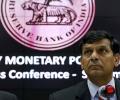
A lack of adequate disclosures raises the financing costs of corporate firms, especially sub-investment grade ones, and keeps the capital markets small, believes RBI deputy governor Viral Acharya.

When costs go down, interest rates will go down, says managing director and CEO Aditya Puri.

Higher interest rate will be payable to FDs of over Rs 1 cr.

Analysts say loan growth, Casa ratio and exposure to sectors under pressure did not indicate any stress at United Bank.

Bank of Baroda has relatively better position on impaired assets.

Move to increase 90-day window to 120 days to give more time to borrowers to service loans.

Banks are in need of government support to manage the stressed assets

Credit profiles have turned healthier from a year ago

Mutual fund houses hold Rs 3,400 crore of Yes Bank's 'riskier' bonds. Reliance MF, Franklin Templeton MF and UTI MF account for bulk of these exposures.

Private equity firm Carlyle Group and associates will acquire a controlling stake of over 50 per cent in PNB Housing Finance by investing in the Rs 4,000 crore preferential issue of equity and warrants of the Delhi-based mortgage lender. After the proposed transactions, expected to be completed by January 1, 2022, Carlyle will also have the right to nominate the chairperson of PNB Housing Finance (PNB HF). This right will continue as long as it holds at least 40 per cent of the share capital on a fully diluted basis.

SBI's gross NPA figures have shown a decline for three consecutive quarters.
Illustration: Uttam Ghosh/Rediff.com After a brief respite at the year's start, FPIs have dumped shares worth more than $5.7 billion (Rs 42,596 crore), taking the cumulative net outflows since October to $10.5 billion (Rs 78,466 crore), and adding to the volatility on the bourses. The figure would have been a lot worse had it not been for net purchases to the tune of $5.7 billion in the primary market from October to date.

The finance minister's meeting with chief executives and managing directors of banks ahead of the Union Budget assumes significance in view of the critical role the banking sector plays in boosting consumer demand across sectors.

'The slide in growth has arisen primarily because we have an NBFC crisis on top of a banking crisis,' points out T T Ram Mohan.

Non-performing loans in the Chinese banking system stood at RMB 1.27 trillion at the end of 2015.
Software firm dismisses charge, says Finacle has proven ability.

Share prices of Dewan Housing, Indiabulls Housing, and PNB Housing have declined 30-80% in the past one year

The finance minister asked lenders to identify eligible borrowers and reach out to them and urged for quick implementation of a sustained resolution plan for the revival of every viable business.
The government plans to inject a total Rs 70,000 crore into the lenders over four years

Lenders can now initiate recovery proceedings since the SC has lifted the standstill on asset classification, which protected stressed accounts from slipping into NPAs.

Govt wants to up investment in Railways

Laggards yet, a number of smaller PSBs in the category have balance sheets which do not give much comfort.
Laggards yet, a number of smaller PSBs in the category have balance sheets which do not give much comfort.

In a message to public sector banks (PSBs) that only performers will survive, the government, in an unprecedented move, has decided to allocate capital to only nine PSBs.

Market cap of government companies has remained unchanged in the past 8 years.

It has been a year since the Reserve Bank of India (RBI) initiated prompt corrective action (PCA), an exercise that puts weak banks under central bank scrutiny, against the 94-year-old Lakshmi Vilas Bank (LVB). But recently, this low-profile Chennai-headquartered bank found itself attracting some unwonted publicity when 60 per cent of its shareholders voted against a proposal to re-appoint seven directors, including one of the promoters, K R Pradeep (who holds around 2 per cent), and the company's managing director & chief executive officer S Sundar.

Experts say the size of the fund shouldn't be a primary criterion for selection.
